Do you need building regulations approval for a loft conversion?

Yes. Building regulations approval is required for every loft conversion in the UK.

It applies whether or not planning permission is needed. Even if your project falls within permitted development, compliance with building regulations remains mandatory.

Planning permission and building regulations are separate processes. Planning considers how the development affects the external appearance and the surrounding area. Building regulations assess how the work is constructed and whether it meets current safety and performance standards.

For a loft conversion, this includes:

  • Structural stability, including steel beams and floor strengthening
  • Fire safety and protected escape routes
  • Insulation and thermal efficiency
  • Ventilation requirements
  • Safe staircase design and adequate head height

Any project that alters the roof structure, installs a new staircase, inserts structural steel or creates a habitable room must comply. Building regulations approval is not optional. It is a legal requirement for all loft conversions.

What building regulations apply to a loft conversion?

A loft conversion must comply with several parts of the Building Regulations. These rules are designed to ensure the new space is safe, structurally sound and suitable for long-term use.
At a high level, the main areas that apply are:

  • Structural safety: The new floor, roof alterations and any steel beams must safely support loads without affecting the stability of the existing house.
  • Fire safety: Converting a loft often creates a three-storey home. This triggers requirements for protected escape routes, fire doors, smoke alarms and fire-resistant construction.
  • Staircase rules: The new staircase must meet standards for pitch, headroom, width, and guarding to ensure safe access between floors.
  • Insulation and energy efficiency: Roof slopes, dormer walls and floors must meet current thermal performance standards to reduce heat loss.
  • Ventilation: Adequate background ventilation and mechanical extract ventilation, especially in bathrooms, must be provided to prevent condensation and moisture build-up.
  • Soundproofing: Acoustic insulation is required between floors to reduce noise transfer from the loft to the rooms below.
  • Electrical safety: Any new electrical work must be installed and certified by a qualified electrician in accordance with current safety standards.
  • Safe staircase design and adequate head height

These requirements work together. They ensure the loft is not just an extra room, but a safe and compliant extension of the home.

Building regulations for loft conversions: What building regulations apply to a loft conversion?

Structural requirements (Part A)

Part A of the Building Regulations covers structural stability. When you convert a loft, you are changing how weight is carried through the house. The structure must be designed so the new room, roof alterations and supporting elements are safe and properly supported.

Most lofts were not built to carry the loads of a habitable room. That is why structural upgrades are almost always required.

Floor strengthening

The existing ceiling joists in a typical house are designed to support plasterboard ceilings, not furniture, partitions and daily foot traffic.

To meet regulations, new structural floor joists are installed. These are sized to safely carry the additional loads and are usually supported by steel beams or load-bearing walls. The new floor must act independently without overstressing the ceilings below.

Steel beam installation

In many loft conversions, steel beams are required to support the new floor and any altered roof structure. These beams span between load-bearing walls and transfer weight down to the foundations. They must be installed exactly as specified, with proper bearing at each end.

Building control will normally inspect the steel before it is enclosed to ensure it matches the approved design.

Load-bearing calculations

All structural alterations must be supported by calculations prepared by a qualified structural engineer. These confirm that the beams, joists and altered roof can safely carry the expected loads.

While homeowners do not need to understand the maths, the principle is important: the new structure must be designed, not guessed. Building control reviews these calculations as part of the approval process.

Roof alterations

Many loft conversions involve cutting into the existing roof. This may include installing rooflights, forming a dormer or converting a hipped roof to a gable.

Whenever rafters are cut or removed, additional support must be added to maintain stability. This could involve strengthening the ridge, adding new timbers or introducing steel supports. The roof must remain secure in all weather conditions.

Roof alterations

Dormer structural support

A dormer is a structural extension, not simply an external addition.

Its walls, roof and floor must be properly tied into the existing structure. The weight of the dormer is carried by new joists and, often, steel beams beneath, ensuring loads are distributed safely.

The overall requirement under Part A is straightforward: a loft conversion must not weaken the building. Every structural change must be designed, calculated and inspected to ensure the home remains stable for long-term use.

Fire safety requirements (Part B)

Part B of the Building Regulations covers fire safety. This is one of the most important aspects of a loft conversion, particularly because converting a loft usually changes a two-storey house into a three-storey home.

The regulations focus on one core principle: if a fire starts, occupants must be able to escape safely.

Protected escape route

Once a loft is converted, the staircase becomes the primary means of escape from the top floor to the final exit at ground level.To comply, this route must be protected from fire. That typically means enclosing the stairwell in fire-resistant construction, so flames and smoke cannot spread into it quickly. Open-plan layouts often need redesigning or additional measures to maintain this protected route.

Fire doors to existing rooms

In most loft conversions that create a third storey, existing doors on the lower floors must be upgraded to fire-rated doors.

This usually includes doors to bedrooms and living rooms opening onto the stair enclosure. The purpose is to slow the spread of fire and protect the escape route long enough for occupants to leave safely. This requirement often surprises homeowners and should be factored into both budget and disruption planning.

Smoke alarms on each floor

Mains-powered, interlinked smoke alarms are required on every storey of the house. If one alarm is triggered, they all sound. This ensures early warning throughout the property, particularly important when adding an additional floor. In some layouts, heat detectors may also be required in kitchens.

Fire-resistant floor construction

The new loft floor must provide adequate fire resistance to the rooms below.
This is usually achieved through fire-rated plasterboard and appropriate detailing around steel beams and service penetrations. Any gaps or exposed structural elements must be properly protected to prevent fire from spreading between levels.

Window escape size, where applicable

In certain two-storey layouts, escape windows can form part of the fire strategy. However, once the house becomes three storeys, reliance on windows alone is rarely sufficient.

Where required, escape windows must meet minimum opening size and access standards to allow safe exit or firefighter entry. Building control will assess whether this is applicable to your specific layout.

Fire safety requirements can influence layout decisions more than many homeowners expect. Stair positioning, door upgrades and structural detailing are often shaped by Part B compliance rather than design preference alone.

Staircase regulations (Part K)

Part K of the Building Regulations covers protection from falling, collision and impact. For a loft conversion, this mainly affects the design and positioning of the new staircase. Stair rules are not about aesthetics. They exist to ensure the stair is safe, usable and practical for daily life.

Staircase regulations (Part K)

Maximum pitch

In most loft conversions, the maximum stair pitch is 42 degrees. This means the staircase cannot be too steep. If the stairs are steeper than this, it can feel more like a ladder than a staircase, which increases the risk of falls. The pitch often influences how much space must be allocated on the floor below.

Minimum head height

A minimum loft height of around 2 metres is generally required over the centre line of the staircase.

This ensures you can use the stairs comfortably without stooping. In loft conversions, achieving this clearance often shapes the layout, particularly where the stair meets the sloping roof.

In some tight areas, slightly reduced head height may be permitted, but this is assessed carefully by building control.

Minimum width

There is no single fixed width for all loft stairs, but the staircase must be wide enough to allow safe and practical use. In most cases, this means a staircase with a width similar to the existing stairs in the house. Very narrow or cramped stairs are unlikely to be approved.

The goal is simple: the loft must feel like part of the home, not accessed by a makeshift route.

Handrails and guarding

Stairs must have secure handrails and guarding to prevent falls.

Where there is a drop at the side of the stairs or landing, balustrades are required. The spacing of spindles must prevent small children from passing through.

These details may seem minor, but they are routinely checked during inspection.

Alternating tread stairs

Alternating tread stairs, sometimes called space-saver stairs, are heavily restricted. They are generally permitted only where the loft is a single habitable room, and there is insufficient space for a standard stair. They are not suitable for primary family bedrooms.

Because they are steeper and less conventional, building control will only approve them in limited circumstances. Staircase design is often one of the biggest layout challenges in a loft conversion. Part K ensures the solution is not just space-efficient, but genuinely safe and practical for everyday use.

Insulation and thermal efficiency (Part L)

Part L of the Building Regulations covers energy efficiency. When you convert a loft, the roof becomes a primary thermal barrier. It must be upgraded to meet current insulation standards, even if the rest of the house is older.

Roof insulation requirements

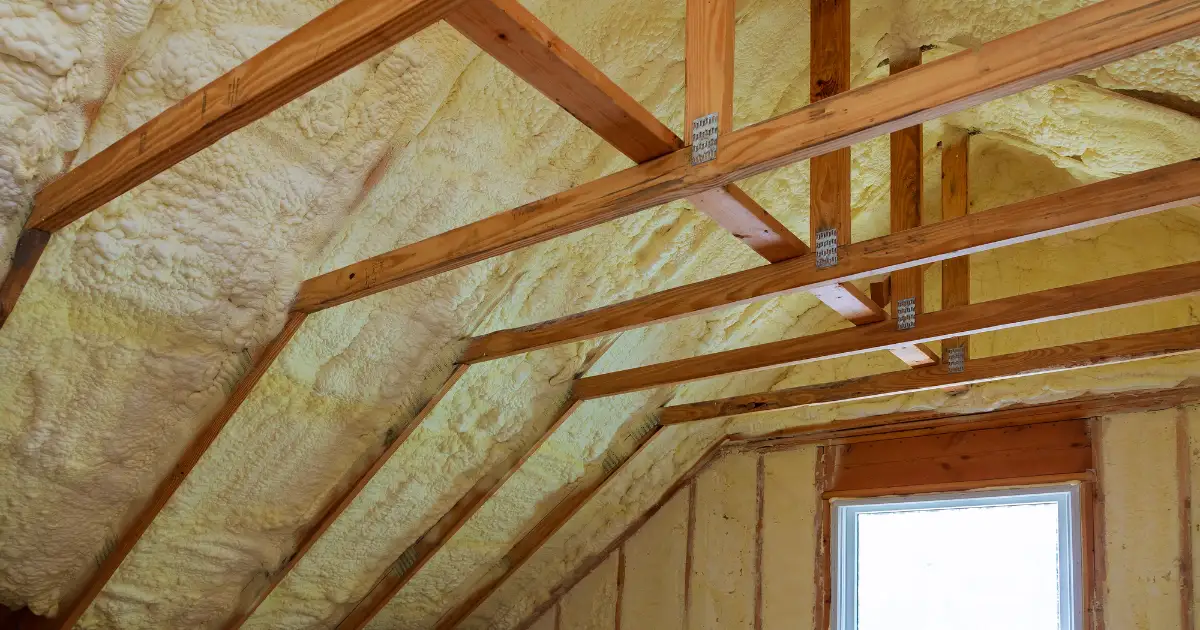
Once a loft is converted into a habitable space, insulating between ceiling joists is no longer enough. The insulation must move to the roof slopes and dormer walls.

Building Regulations require the roof structure to achieve modern thermal performance levels. This usually means installing high-performance insulation between and below the rafters.

In a loft conversion, insulation is inspected before plasterboard is fitted to ensure compliance.

Roof insulation requirements

U-value expectations

U-values measure the rate of heat transfer through a building element. The lower the U-value, the better the insulation performance.

You do not need to calculate these yourself. Your designer or builder will specify insulation thickness and type to meet the required standard. Building control checks that the proposed build-up achieves the correct thermal performance.

The key point for homeowners is this: the converted loft must meet current energy efficiency standards, even if the original roof did not.

Rigid board or mineral wool

Two common insulation types are used in loft conversions:

  • Rigid insulation boards (such as PIR boards) provide high thermal performance in a relatively thin depth. They are often used between and below rafters where space is tight.
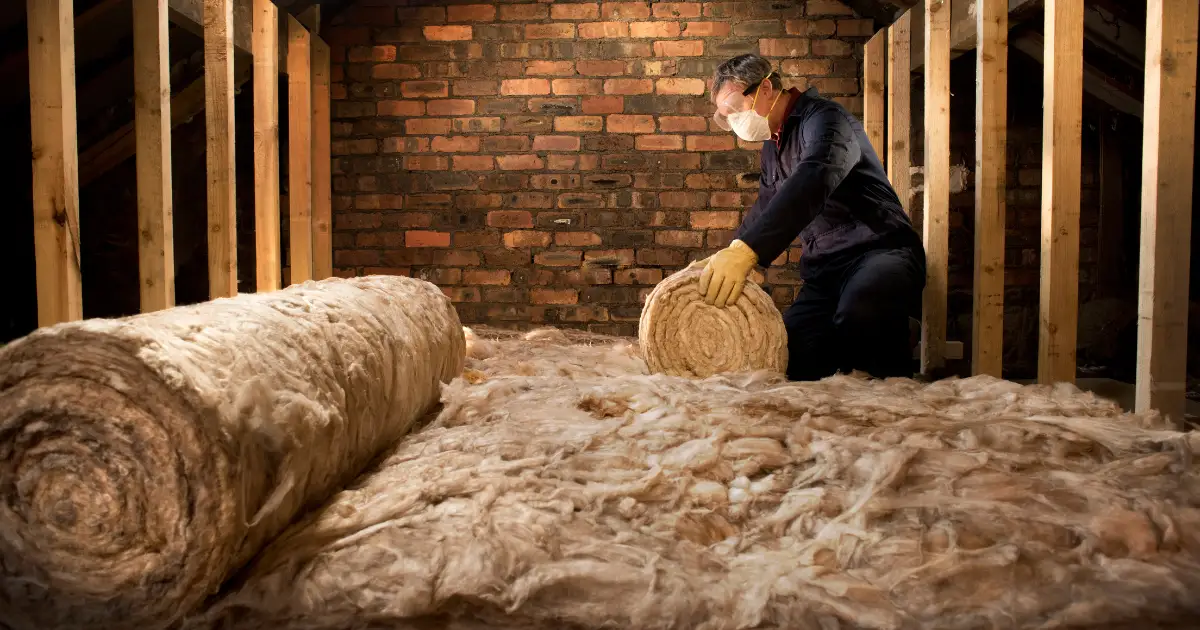
  • Mineral wool insulation is commonly used between floor joists for acoustic performance and in some roof build-ups, but it usually requires greater thickness to meet thermal targets.

In many loft conversions, a combination of materials is used to meet both thermal and sound insulation requirements.

Cold roof or warm roof construction

Most loft conversions use a warm roof design. This means insulation is placed directly under or around the rafters, keeping the roof structure itself warmer and reducing the risk of condensation.
A cold roof places insulation at ceiling level, leaving the roof space above unheated.

This is typical in unused lofts but is generally not suitable once the space becomes habitable. Warm roof construction is usually required to comply with current UK loft insulation regulations.

Loft insulation regulations in the UK

Loft insulation is required under UK building regulations when converting a loft. The upgraded space must meet current Part L standards, regardless of the property's age.

This may mean increasing the rafter depth, adding insulation below the rafters, or upgrading the dormer walls and flat roofs. Thermal bridging, ventilation gaps, and condensation control are also considered during the approval process.

The purpose of Part L is straightforward: the new loft room should be comfortable year-round and energy-efficient, not a space that overheats in summer and loses heat in winter.

Sound insulation requirements (Part E)

Part E of the Building Regulations covers resistance to sound. In a loft conversion, this mainly concerns noise transfer between floors and, in semi-detached or terraced homes, between adjoining properties.

The aim is to reduce both airborne sound (such as voices or music) and impact sound (such as footsteps).

Between floors

When a loft becomes a new room, additional acoustic insulation is usually required between the new floor and the rooms below.

This typically involves mineral wool installed between the new floor joists, sometimes combined with resilient layers or upgraded ceiling finishes beneath. The goal is to reduce footfall noise and everyday movement transferring into bedrooms or living spaces below.

Building control checks that appropriate acoustic measures are included before ceilings are closed up.

Semi-detached and terraced considerations

In semi-detached and terraced houses, sound separation between properties is critical.

If structural work affects the party wall, or if the loft space forms part of the separating structure, building control may assess whether the existing wall provides adequate sound resistance. In some cases, additional lining or insulation may be required to meet current standards.

Party wall implications

Where steel beams are inserted into a shared wall, this can affect both structural stability and acoustic performance.

Although the Party Wall Act is separate from Building Regulations, any changes to the shared structure must still maintain proper sound insulation between homes.

When upgrades are required

Not every loft conversion triggers extensive acoustic upgrades, but improvements are commonly required where:

  • A new floor is constructed
  • Ceiling linings are replaced
  • Structural elements are inserted into party walls

The principle under Part E is straightforward: converting the loft should not make the home noisier, either for you or for your neighbour.

How building regulations approval is obtained

Approval for a loft conversion under building regulations is usually obtained through either a Full Plans application or a Building Notice.

A Full Plans application involves submitting detailed drawings and structural calculations for review before work begins. This route provides written approval in advance. A Building Notice allows work to start sooner, with compliance assessed during construction. Your builder or designer will usually advise on the appropriate route.

During the build, staged inspections take place at key points, such as after structural steel is installed and before insulation or ceilings are closed up. Once the project is complete and all required certification has been provided, a completion certificate is issued. This confirms the loft conversion meets Building Regulations and will be needed when selling the property.

For a more detailed breakdown of the process, see our full guide to building control for loft conversions.

Frequently asked questions about loft conversion building regulations

These are the most common practical questions homeowners ask before starting a loft conversion. The answers below explain how building regulations apply in real terms.

Can I do a loft conversion without building regulations?

No. All loft conversions require building regulations approval.

Even if the project falls under permitted development and does not need planning permission, building regulations still apply. Structural alterations, fire protection, insulation and staircase installation automatically trigger compliance. Skipping approval can create serious issues when selling the property and may require costly retrospective work.

How long does approval take?

It depends on the route used and the local authority involved.

A Full Plans application can take several weeks to assess before work begins. A Building Notice allows construction to start sooner, with compliance reviewed during the build. Inspections are arranged at key stages rather than approved in one single step.

In practice, most loft conversions proceed without delay, provided drawings and structural calculations are submitted correctly.

Do I need drawings?

Yes. Clear drawings are essential.

Even if using a Building Notice, building control will expect scaled plans, sections, and structural details showing how the loft will comply with regulations. These drawings demonstrate staircase design, fire protection measures, insulation build-up and structural alterations.

Without proper drawings, approval becomes difficult, and delays are more likely.

Do I need a structural engineer?

In most loft conversions, yes.

New floor joists, steel beams and roof alterations require structural calculations prepared by a qualified structural engineer. Building control reviews these calculations before and during construction to confirm that the structure is safe.

Loft conversions without engineered calculations are unlikely to receive approval.

What happens if I sell without approval?

When selling a property, solicitors will request a building control completion certificate for any loft conversion.

If approval cannot be shown, buyers may withdraw, renegotiate the price or request indemnity insurance. In some cases, the local authority may require retrospective regularisation, which can involve opening up parts of the structure for inspection.

Building regulations approval protects both safety and resale value. It is not simply administrative paperwork.