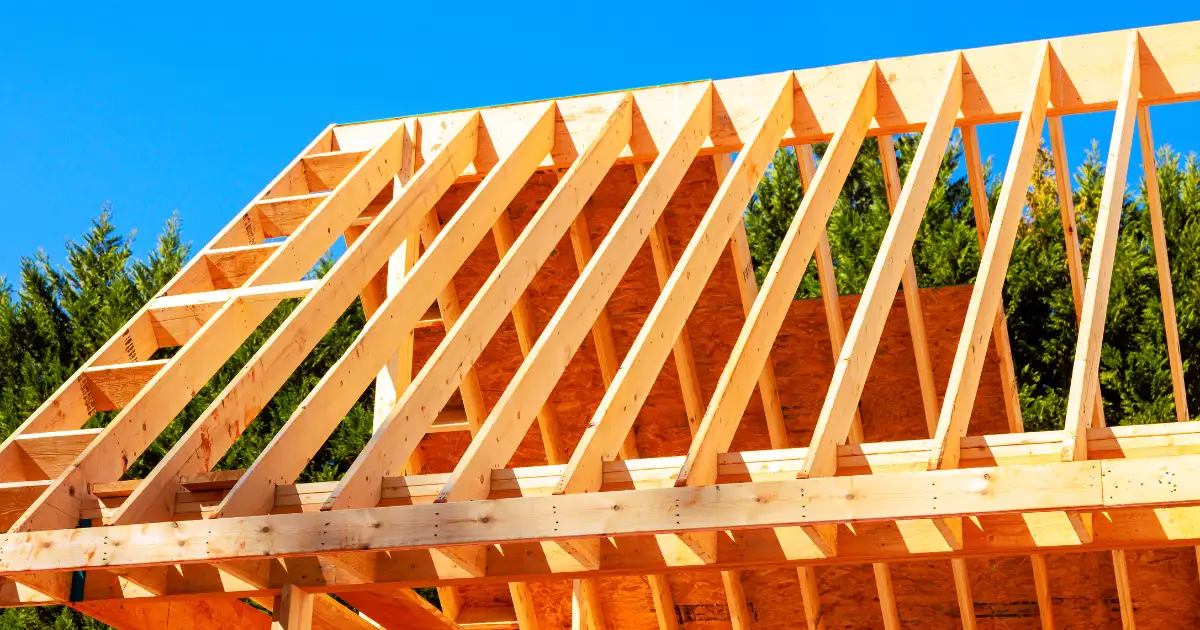
A trussed roof loft conversion is where your loft sits under a roof built with prefabricated timber frames, rather than an open structure.
Instead of clear space, you will see a network of diagonal timbers forming a “W” shape across the loft. These trusses were widely used in homes built from the 1960s onwards because they are quick to install and cost-effective. In contrast, older cut roofs tend to have more open space, making them easier to convert.
This structure matters because those internal timbers are doing an important job supporting the roof. They cannot simply be removed to create a room. To convert the loft, the structure has to be redesigned, usually with steel beams added to take the load and open up the space.
In most cases, yes, but it is more complex and requires structural work.
Trussed roofs are designed with internal supports that cannot be removed without replacing their function. To create usable space, the structure has to be redesigned, usually with steel beams added to carry the load and open up the loft.
This makes the process more involved than a standard loft conversion. It takes longer, costs more, and needs careful structural planning. Some layouts are also tighter, which can limit how the final space is designed.
Even so, trussed roof conversions are common. The key difference is not whether it can be done, but how much work is needed to make it practical.

Trussed roof loft conversions are usually more expensive than standard loft conversions. This is because the internal structure has to be redesigned and reinforced before you can create usable space. The extra work involved increases both labour and material costs.
Costs can go higher depending on the size of the loft, the level of structural work, and the type of conversion you choose.
While most conversions fall within a typical range, certain factors can cause the price to increase. It usually comes down to how much structural work is needed and how ambitious your plans are.
Here are some of the main things that can increase the overall cost:
Trussed roofs are more complex because the structure you see inside the loft is actively holding the roof up. In a traditional loft, the space is more open, so you can work around the existing structure. In a trussed roof, those diagonal timbers are doing a job, which means they cannot simply be removed to create a room.
The complexity comes from needing to replace how the roof is supported while the work is carried out:
This is why trussed loft conversions take more planning, more time and more structural work than other types.
Not all truss roofs are built the same. There are several variations, each with its layout, strengths, and potential challenges when it comes to converting your loft.
Knowing which type you have is a helpful first step. It can help you understand what structural work might be needed, how much usable space you’ll gain, and whether a conversion is realistic without major changes.
Below, we’ve broken down the most common types of truss roofs and what each one means for your loft plans.

Fink trusses are the most common in homes built after the 1960s. Their signature W-shaped web of supports makes them strong, affordable, and easy to install.
However, the dense framework of diagonal beams can take up a lot of space, making loft conversions more complicated.
Here's a detailed image of the structure to get an idea of the signature "W" structure.
King post trusses are a simpler design with two sloping beams (top chords) and a single vertical post in the centre for support. These are often used in smaller spaces, like garages or extensions. Their straightforward structure means they’re usually easier to modify for a loft conversion compared to more complex designs.
Queen post trusses are like an upgrade to the king post. Instead of one vertical post, they use two, allowing for wider spans and a bit more open space in the loft. This makes them more suitable for loft conversions in homes with larger roofs.
Howe trusses feature a mix of vertical and diagonal supports, making them very strong and ideal for longer roof spans. While they’re great for stability, the dense network of beams can limit open loft space and make conversions more challenging without significant modifications.

Raised tie trusses are designed with the bottom beam (tie) positioned higher than usual. This creates more headroom, a huge bonus if you consider converting your loft.
Raised tie trusses are often a better conversion starting point than other types.
Scissor trusses create a vaulted or cathedral-style ceiling, with the bottom beams angling upwards instead of flat. While they’re less common in standard homes, they’re great for adding a spacious and unique look to loft conversions.
Converting a truss roof loft is perfectly doable, but it takes more planning and structural work than a standard loft conversion. Below is a simple breakdown of what to expect at each stage so you can move forward with confidence.

The first step is a structural survey. A qualified engineer will assess the construction of your existing roof and determine the safest method for removing or replacing the internal timber supports. These supports, often arranged in a W shape, give the truss roof its strength but get in the way when you’re trying to create usable space.
To solve this, steel beams are usually installed to take over the structural load. At the same time, you’ll work with a designer or loft conversion specialist to plan your new space. This includes deciding where the staircase will go, how much headroom you’ll have, and what kind of layout will work best.
If the existing loft space is too low, you may need to raise the roof or lower the ceilings below to meet building regulations.
Truss roof loft conversions often fall under permitted development, which means you don’t need full planning permission. However, this depends on your property type and whether you're altering the roof height or structure. If you live in a conservation area or plan to make major changes to the exterior of your home, you may require formal approval.
Regardless of whether planning permission is needed, building regulations always apply. These rules cover structural safety, insulation, fire escapes, and energy efficiency. Your builder or loft company will usually handle the paperwork, but it's worth understanding what needs to be signed off.
This is where your loft begins to transform. The internal timber braces that make truss roofs difficult to convert are carefully removed and replaced with steel beams, often referred to as RSJs. These beams span the width of your loft, carrying the weight of the roof and allowing the space to open up.
The work needs to be done gradually and with precision, typically throughout a couple of weeks. Once complete, you’ll be left with a clear, strong loft space ready for the next stage.
With the structural work complete, your conversion proceeds to the build phase. This includes fitting insulation, electrical wiring, plumbing if needed, plasterboarding, and installing the staircase. Once that's in place, the loft will be ready for flooring, windows, paintwork, and any bespoke features you’ve planned.
This part of the process feels much more like a typical home renovation and usually takes a few weeks to complete. Ultimately, your new space will look and feel just like any other room in your home.
Most truss roof loft conversions take between eight and twelve weeks from start to finish. The most disruptive stage is usually the installation of steel beams, especially if ceiling work is required below. However, experienced builders know how to minimise disruption and keep the rest of your home livable during the build.
These are the questions most homeowners ask when they realise their loft has a trussed roof. The answers below will help you understand what is realistic, what to expect, and whether this type of conversion makes sense for your home.
It depends on your space, budget and expectations. If your loft has enough height and a workable layout, it can be a strong option. The main factor is cost. Trussed conversions are more expensive, so the decision often comes down to whether the extra space is worth the investment.
In most cases, yes.
The internal timbers are supporting the roof, so they need to be replaced with something stronger. Steel beams are used to carry the load and allow the space to open up safely.
You are usually looking at £10,000 to £25,000 more. This varies depending on size and design, but the extra cost comes from structural work, steel installation and more complex labour. The finish can be similar, but the build process is more involved.
Not in most cases, to create a proper room, you need an open, usable space. Leaving trusses in place limits layout and headroom, so most conversions involve removing and replacing them fully.
It changes how the roof is supported, but it is designed to be safe.
The load is transferred through new structural elements, usually into the external walls. When done properly, it does not negatively affect the rest of the house, but it does require careful planning and engineering.
Possibly as bathrooms need pipework, drainage and enough headroom. In a trussed loft, working around the structure can make this tighter. It is still possible, but the layout becomes more important and sometimes more restricted.
Look at the shape of the timbers in your loft. If you see a repeating pattern of diagonal supports forming “W” shapes, it is a trussed roof. If the space is more open, with fewer internal supports, it is likely a traditional cut roof.