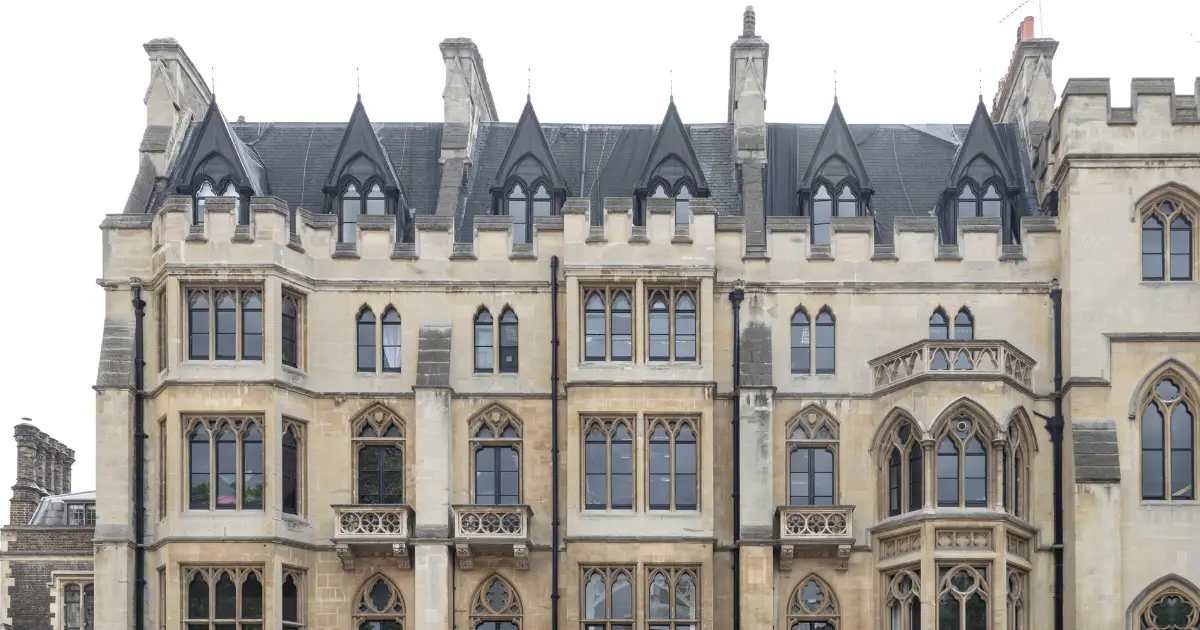
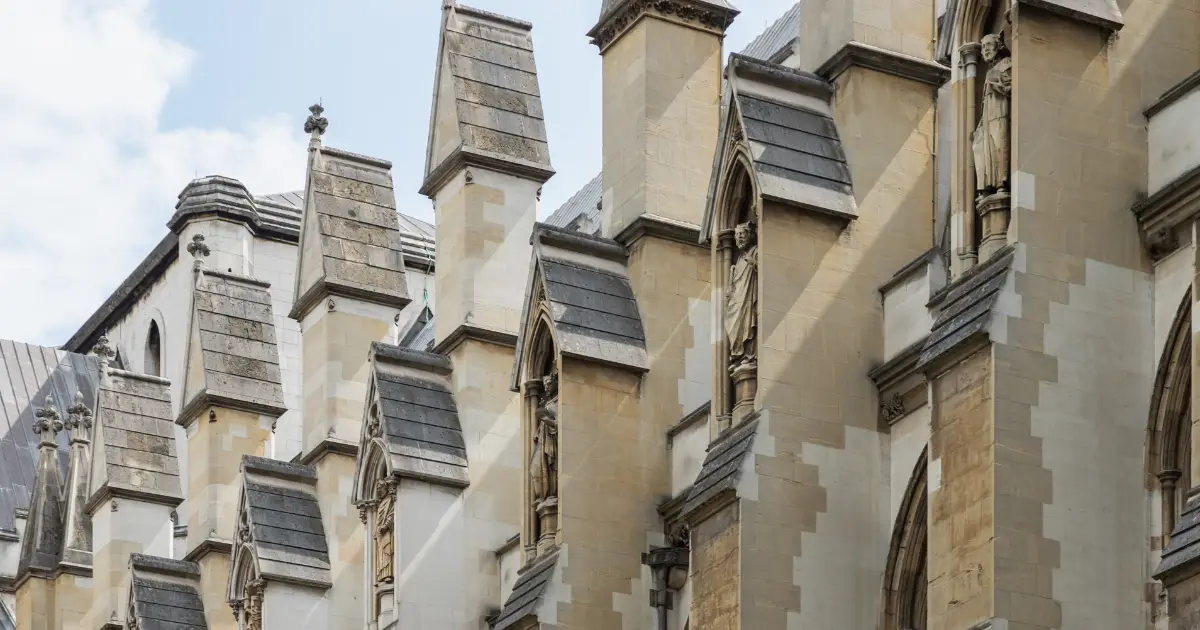
Listed building consent is formal approval from your local authority to make changes to a listed building that could affect its historic or architectural significance.
In simple terms, it allows you to alter, extend, or repair a listed property where, lawfully, those works would change the building’s character. This applies whether the changes are internal or external, and whether they seem minor or substantial.
Listed building consent exists to protect historic buildings, not to prevent change altogether. Sensitive alterations are often allowed, but they must be justified, well designed and appropriate to the building’s age, materials and original features.

You need listed building consent whenever proposed work could affect the character of a listed building. This applies regardless of whether the work seems small, is inside the property, or would normally be allowed under permitted development.
You will usually need listed building consent for:
Listed building consent is usually not required for genuine like-for-like repairs, where materials, construction methods and details are replicated exactly, and the building’s character is unchanged. For example, repairing existing timber using the same timber type and traditional methods may fall outside the consent process.
However, work becomes an alteration as soon as it changes materials, techniques, appearance or layout. Even if the intention is maintenance or improvement, upgrades such as replacing historic materials with modern alternatives, changing structural elements, or modifying internal layouts will normally require listed building consent.
This distinction is important because many projects described as “repairs” are legally treated as alterations once character or fabric is affected.
Listed building consent is required for any work that affects the character of a listed building, whether internal or external. This applies even where planning permission is not needed. Below are the most common categories of work that require approval, explained in practical terms.
Any alteration to the structure of a listed building will almost always need consent. This includes removing or altering load-bearing walls, inserting steel beams, changing roof structures, or underpinning foundations. Even work that is hidden once finished can affect the building’s historic fabric and therefore needs approval.

Changes to the exterior are closely controlled. Replacing windows or doors, altering roof coverings, adding rooflights, changing chimney stacks, or modifying gutters and rainwater goods usually requires consent. Like-for-like repairs may be acceptable, but upgrades or material changes are treated as alterations.
Internal works are one of the most misunderstood areas of listed building control. Consent is required for:
Even when these features are not visible from the outside, they often contribute to the building’s historic significance.
Introducing modern elements can still require listed building consent if they affect the building's character. This includes:
The key test is not whether the upgrade is modern, but whether it alters the building’s original materials, layout or appearance.
Loft conversions almost always require listed building consent, as they typically involve structural changes, roof alterations, new staircases and insulation upgrades. This is covered in more detail later in the guide, but it’s important to assume consent will be needed from the outset when dealing with a listed property.
If there is any doubt, it’s safer to assume consent is required and confirm before work begins. Carrying out unauthorised works to a listed building can lead to enforcement action and costly remedial work later.
Listed building consent and planning permission are two separate legal approvals, and having one does not replace the other. This is one of the most common areas of confusion for homeowners working on listed properties.
Planning permission controls how a development affects the outside world, such as size, height, and impact on neighbours. Listed building consent focuses on protecting the building's historic character, both inside and out.
It’s entirely possible to need both approvals, and receiving planning permission does not automatically cover listed building consent.
You may need both listed building consent and planning permission if your project:
A common mistake is assuming that once planning permission is granted, work can begin. For listed buildings, starting work without listed building consent is a criminal offence, even if planning approval is already in place.
The safest approach is to treat them as parallel approvals, each with its own purpose, requirements and decision process.
In England and Wales, listed buildings are placed into three grades. These grades reflect historic and architectural importance, not whether changes are allowed. All listed buildings are protected by law, but the level of scrutiny increases with the grade.
The key thing to understand is this: listing does not mean “no changes allowed”. It means changes must be carefully justified and appropriate to the building’s significance.
Below, we explain what each grade actually means for homeowners and provide clarifications on each.
A frequent misunderstanding is that Grade II listed buildings cannot be altered. This is not true. Many Grade II homes are successfully adapted every year, including internal changes and loft conversions.
What matters is how the work is designed, not simply the grade. Councils assess whether proposals preserve or enhance the character. Do they retain important historic fabric, and are you using appropriate methods?
Applying for listed building consent is a structured process, but it’s very different from a standard planning application. Decisions are based on heritage impact, not just design or size. Getting the steps right early can save months of delay.
Below is a clear, homeowner-friendly walkthrough of how the process works in practice.
Pre-application advice is one of the most important steps and often the most overlooked. This involves speaking to your local authority’s conservation officer before submitting anything.
They can:
While not mandatory, pre-application advice can significantly reduce the risk of refusal or repeated revisions.
Listed building consent applications are judged on evidence and justification as much as design. Clear drawings show what is changing, but the heritage statement explains why those changes are acceptable.
Most applications require a full set of existing and proposed drawings, covering all areas affected by the works. Where historic fabric is altered, detailed sections are often needed to show how original materials, structures, or features will be treated.
The heritage statement is a key part of the application. It sets out the building’s historic significance, explains what is being changed, and justifies the necessity of the work. Crucially, it also shows how the proposal has been designed to minimise harm to the building’s character.
For loft conversions and internal alterations in listed buildings, this document is often the deciding factor. A clear, well-reasoned heritage statement can make the difference between approval, delay, or refusal.
Listed building consent is submitted directly to your local council, not a national body. Applications are usually made through the council’s planning system or the Planning Portal.
There is no application fee for listed building consent in England, but professional costs for drawings and heritage reports still apply.
Once an application is submitted, it is reviewed by the local authority and shared with relevant specialists. This typically includes the council’s conservation officer and internal heritage advisors, and in some cases, national heritage bodies if the building or proposed works are particularly sensitive.
Neighbours may also be notified, even where the changes are internal. At this stage, the focus is not on modern planning considerations, but on whether the proposal preserves the building’s historic character and significance.
Listed building consent has a statutory decision period of eight weeks, but in practice, decisions can take longer for more complex schemes. Delays usually arise where heritage impacts are not clearly explained, key details are missing, or design changes are requested during the review process.
Clear drawings, careful justification, and a well-prepared heritage statement all help keep the application moving and reduce the risk of delays.
Loft conversions in listed buildings are assessed very differently from those in standard homes. Even if a loft appears unused or has been altered in the past, councils generally treat the roof space and its structure as part of the building’s historic significance. Because of this, listed building consent is almost always required for loft conversion works.
What matters is not just what you add, but what you change, remove, or disturb along the way.
Loft spaces often contain original features that have survived precisely because they were out of everyday use. Roof timbers, construction methods and structural layouts can be centuries old, and conservation officers are careful to protect these elements wherever possible.
When assessing a proposal, councils usually look closely at whether original roof timbers are retained, how new structural supports interact with the historic fabric, and whether the roof's external form is altered. Even changes that feel hidden or purely structural can have a significant impact on the building’s heritage if they affect its integrity.
Original rafters, purlins and trusses are often considered integral to a listed building’s character. Cutting, removing, or enclosing them typically requires clear, well-reasoned justification.
Where strengthening is unavoidable, conservation officers usually favour minimal intervention and reversible solutions where possible. New steel or timber supports are often expected to sit alongside historic elements rather than replace them outright.
Externally, the roofline is treated with particular care. Raising the roof, changing its pitch, or altering its silhouette will almost always require strong heritage justification, as these changes can fundamentally alter how the building is read from the outside.
Dormers are especially sensitive in listed buildings. Even rear dormers, which might be acceptable under normal planning rules, often face resistance because they change the historic roof form.
Rooflights are sometimes viewed more favourably, but only when discreetly positioned, carefully sized and spaced, and designed to sit flush with the roof covering rather than to appear prominent.
Insulation is another common challenge. Introducing modern insulation can affect a historic building's breathability, increasing the risk of trapped moisture or long-term damage. Applications usually need to demonstrate the use of breathable materials, careful detailing around rafters and walls, and no unnecessary loss of historic finishes.
Creating access to the loft is often one of the most sensitive aspects of the conversion. New staircases can cut through historic floor structures or disrupt the layout of important rooms below.
Consent decisions frequently hinge on where the staircase is placed, how visible it is within the house, and whether original plaster, joinery or floorboards are lost in the process. Councils also assess whether circulation routes still feel logical and sympathetic to the building’s original layout.
Poorly positioned staircases are a common reason for refusal, even where the loft space itself might otherwise be acceptable.
Listed building consent can feel unclear, especially if it’s your first time dealing with a protected property. These answer the questions homeowners most often ask about what consent involves, how strict it is, and what happens if things go wrong. The aim is to give you clarity early, so you can plan work with confidence and avoid costly mistakes.
A heritage statement explains what is special about the building and how your proposed works affect that significance. It is a key part of most listed building consent applications.
Rather than arguing for change, a good heritage statement shows that the design understands the building’s history, materials and character, and explains why any alterations are necessary and proportionate. Councils rely heavily on this document when deciding whether to approve an application.
In some cases, yes, but it is risky and not guaranteed.
If work has already been carried out without consent, you can apply retrospectively. However, councils are under no obligation to approve it, even if the work would likely have been accepted beforehand. If retrospective consent is refused, you may be required to undo the work entirely.
Carrying out works without consent is a criminal offence, not a planning breach.
Councils can take enforcement action requiring the building to be returned to its previous state, and in serious cases, prosecution can follow. Liability sits with the owner, not the builder, even if the work was done before you bought the property.
This is why checks should always be made before starting any work.
Once submitted, most listed building consent applications are decided within 8 weeks. More complex proposals, or those involving extensive consultation, can take longer.
Pre-application advice and well-prepared drawings and heritage statements often help avoid delays later in the process.
Yes. Listed building consent usually expires after three years if the approved work has not started.
If consent lapses, a new application is required. This matters if plans change, funding is delayed, or work is paused for an extended period.
No. There is no application fee for listed building consent.
That said, there may still be costs involved for professional drawings, surveys, heritage statements, or specialist reports required to support the application.
Yes. Consent can be refused if the council believes the works would harm the building’s special architectural or historic interest.
Refusals often relate to loss of original fabric, unsympathetic alterations, or insufficient justification for change. In many cases, schemes can be revised and resubmitted with a better design approach or clearer heritage reasoning. Handled early and thoughtfully, most issues can be addressed before they reach that point.